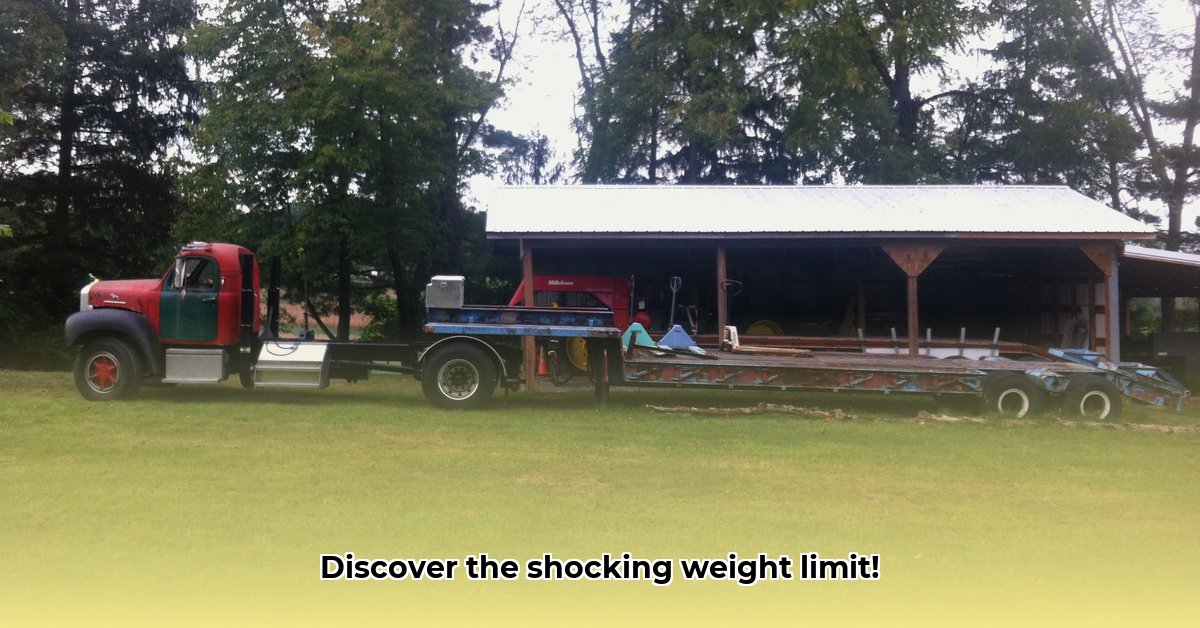
Determining the safe and legal weight capacity for a single-axle tractor requires careful consideration of several factors. This guide provides actionable steps to ensure compliance and prevent costly mistakes or accidents. For more detailed information on axle weights, see this helpful resource: Axle Weight Guide.
State Laws: The Foundation of Safe Towing
Every state has unique regulations governing the maximum weight a single-axle tractor can legally tow. Ignoring these laws can result in hefty fines and jeopardize safety. Before hauling any load, consult your state's Department of Transportation (DOT) website for specific weight limits. These limits often vary depending on the type of road (interstate vs. local) and time of year. Calling your state's DOT directly for clarification is always advisable. Remember that federal regulations provide a baseline, but individual state laws may be more stringent.
Your Tractor's Specifications: The Manufacturer's Guidance
Your tractor's owner's manual provides crucial information regarding its recommended maximum towing capacity. This figure represents the manufacturer's assessment of safe operating limits and should always be respected. Exceeding this limit can void your warranty and dramatically increase the risk of mechanical failure or accidents.
Tire Capacity: A Critical Factor
Each tire on your tractor has a maximum weight capacity clearly printed on its sidewall. Never exceed this limit. Overloaded tires are prone to blowouts, which can lead to loss of control and serious accidents. Ensure your tires are rated for the combined weight of your tractor and its load.
Weight Distribution: Achieving Stability
Even if you operate within legal and manufacturer-recommended limits, improper weight distribution can compromise stability and handling. Uneven weight distribution can place excessive stress on the tractor's axles, leading to poor performance and dangerous situations. Utilizing a weight distribution hitch can significantly improve stability by evenly distributing the load across the axles.
Environmental Factors: Adjusting for Real-World Conditions
Environmental factors such as steep inclines, uneven road surfaces, and adverse weather significantly impact towing capacity. Always reduce your load and adjust your speed accordingly in challenging conditions. Prioritizing caution in such scenarios prevents accidents and protects your equipment.
Actionable Steps for Safe Towing
Follow these five key steps to ensure safe and legal towing:
Research State Regulations: Consult your state's DOT website to determine the legal weight limits for your route. (This step is crucial for legal compliance).
Review the Owner's Manual: Refer to your tractor's owner's manual for the manufacturer's recommended maximum towing capacity. (This is essential for both safety and warranty protection).
Verify Tire Ratings: Check the sidewalls of each tire to determine their weight capacity and ensure they can handle the total weight (tractor + load). (Tire failure is a critical safety concern).
Optimize Weight Distribution: Use a weight distribution hitch to balance the load evenly across the tractor's axles for optimal stability and handling. (Improper distribution significantly increases risk).
Adjust for Conditions: Reduce your load and adjust driving speed according to terrain, weather, and visibility conditions. (Environmental factors dramatically impact safe towing limits).
Key Factors Affecting Towing Capacity: A Summary
The following table summarizes the key factors influencing a single-axle tractor's towing capacity:
| Factor | Impact on Towing Capacity | Mitigation Strategy |
|---|---|---|
| State Regulations | Defines legal limits; exceeding these is illegal. | Consult the state's DOT website and call with any questions. |
| Tractor Specifications | Manufacturer's recommended capacity; essential for safety. | Review the owner's manual thoroughly; never exceed limits. |
| Tire Weight Capacity | Each tire has a limit; exceeding this leads to blowouts. | Check tire sidewalls; use appropriately-rated tires. |
| Weight Distribution | Affects stability and handling; even distribution is key. | Employ a weight distribution hitch; load evenly. |
| Terrain and Weather | Significantly impacts capacity; reduces effective limits. | Reduce loads and adjust speed in challenging conditions. |
By following this guide and prioritizing safety, you can ensure legal and responsible towing operations with your single-axle tractor. Remember, proactive planning and adherence to regulations are paramount to preventing accidents and ensuring the longevity of your equipment.